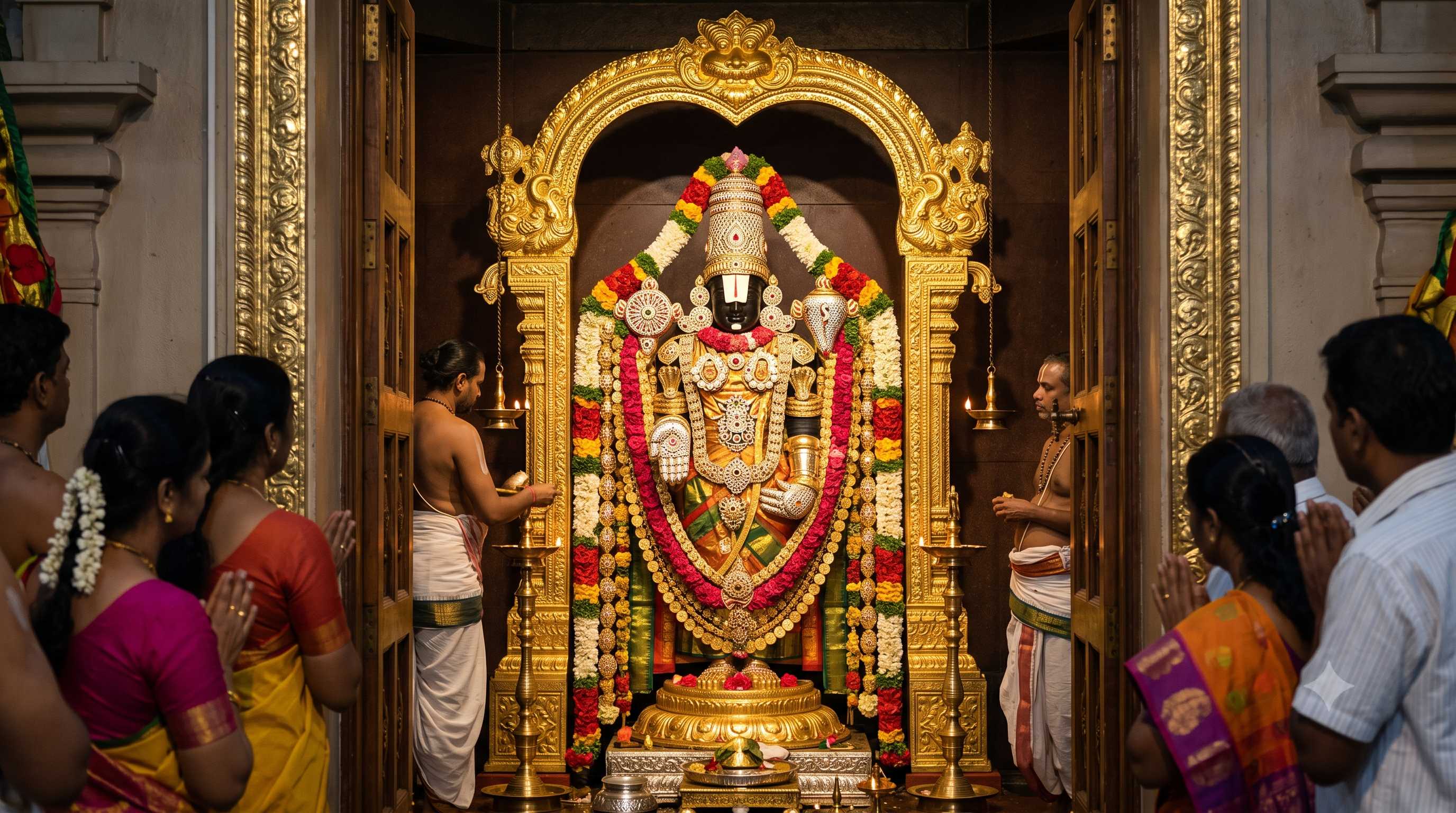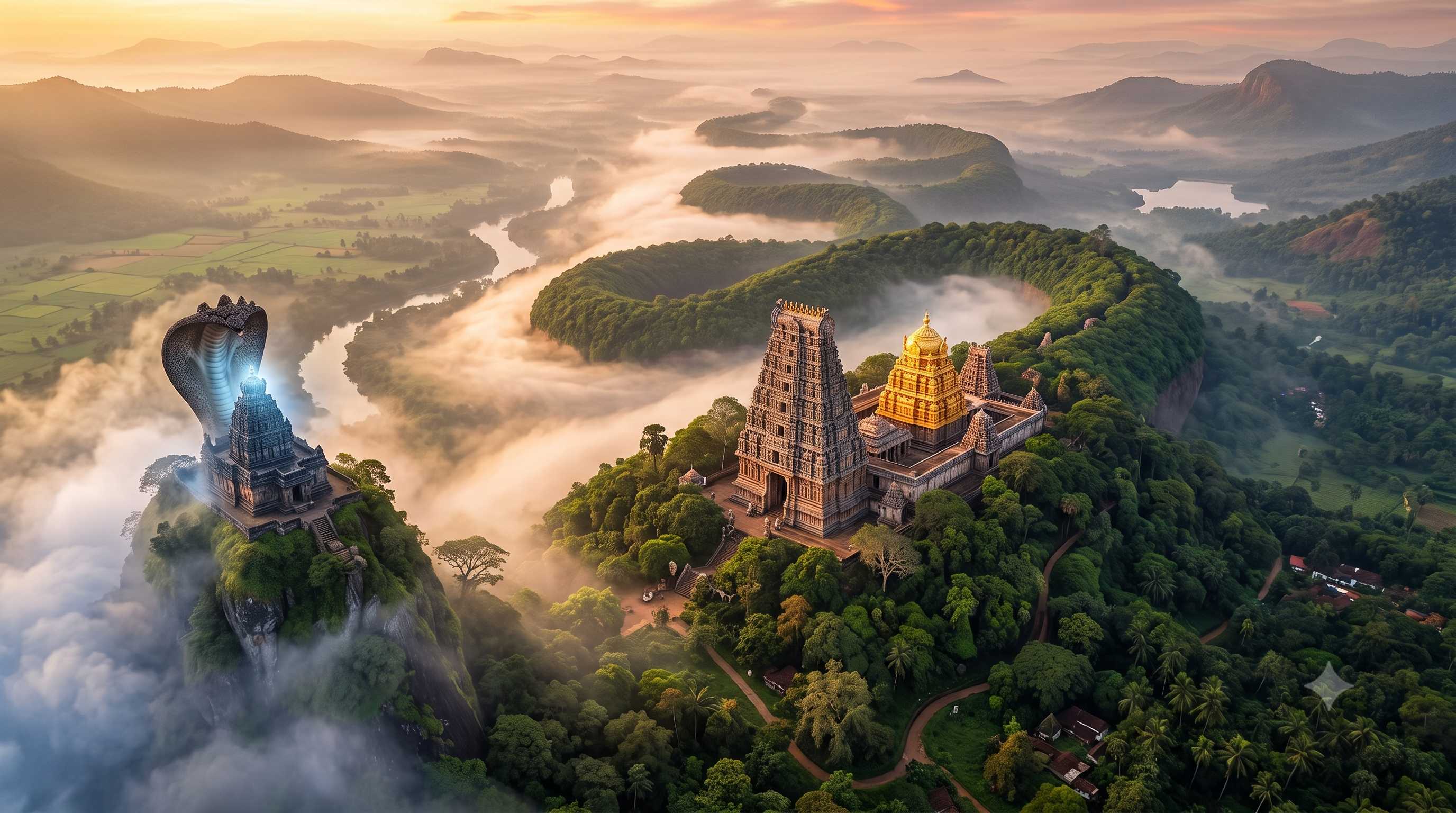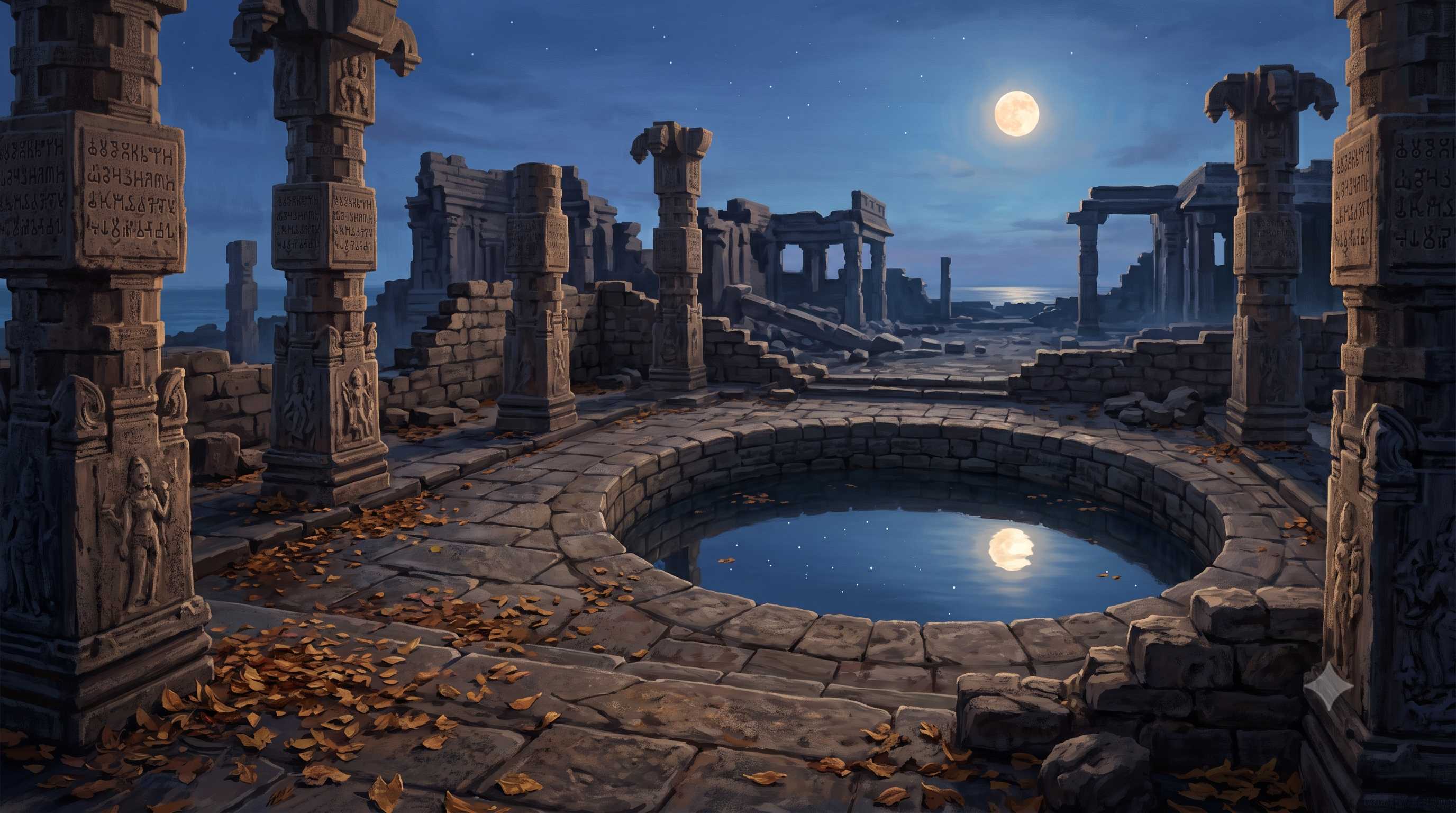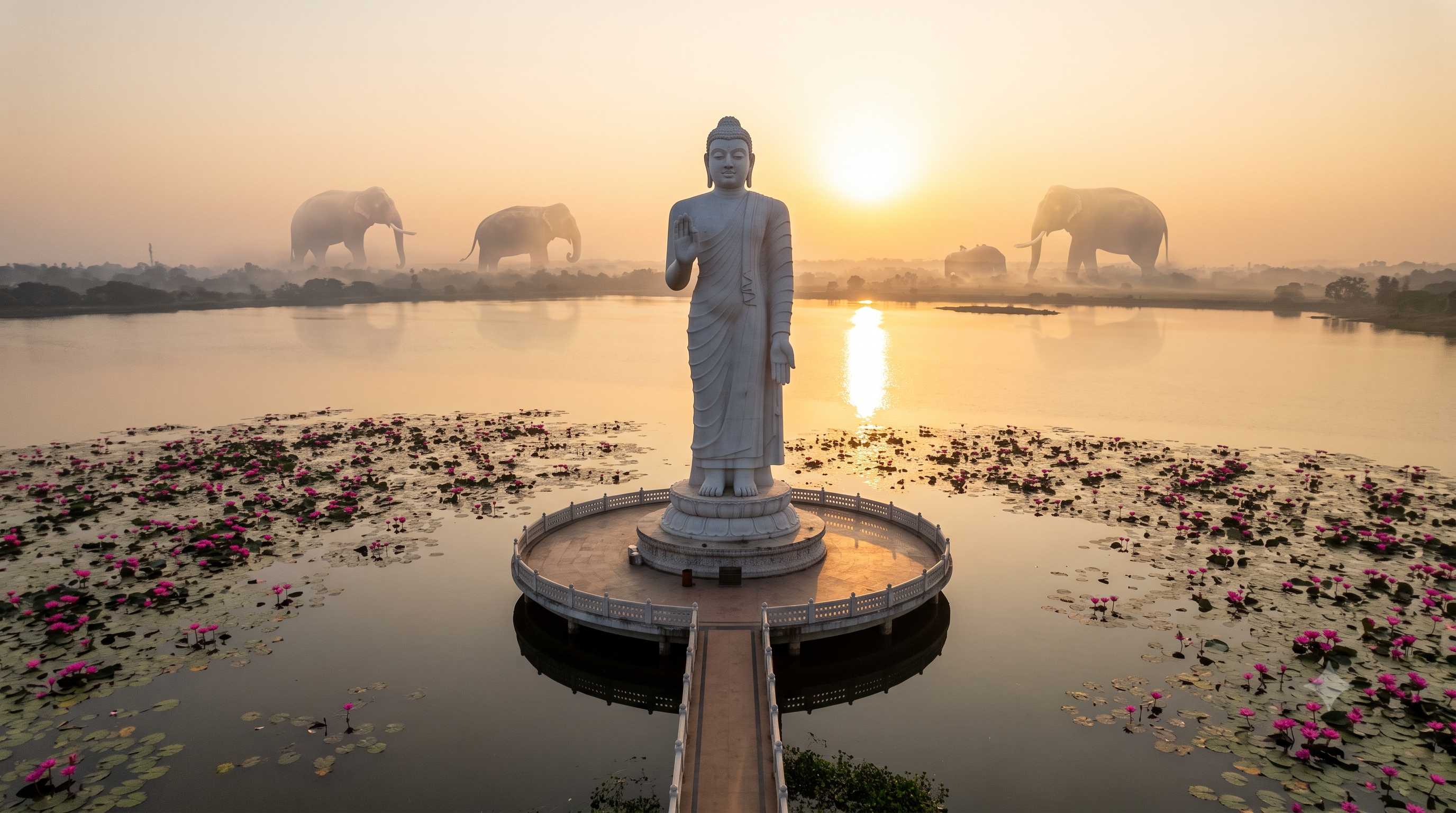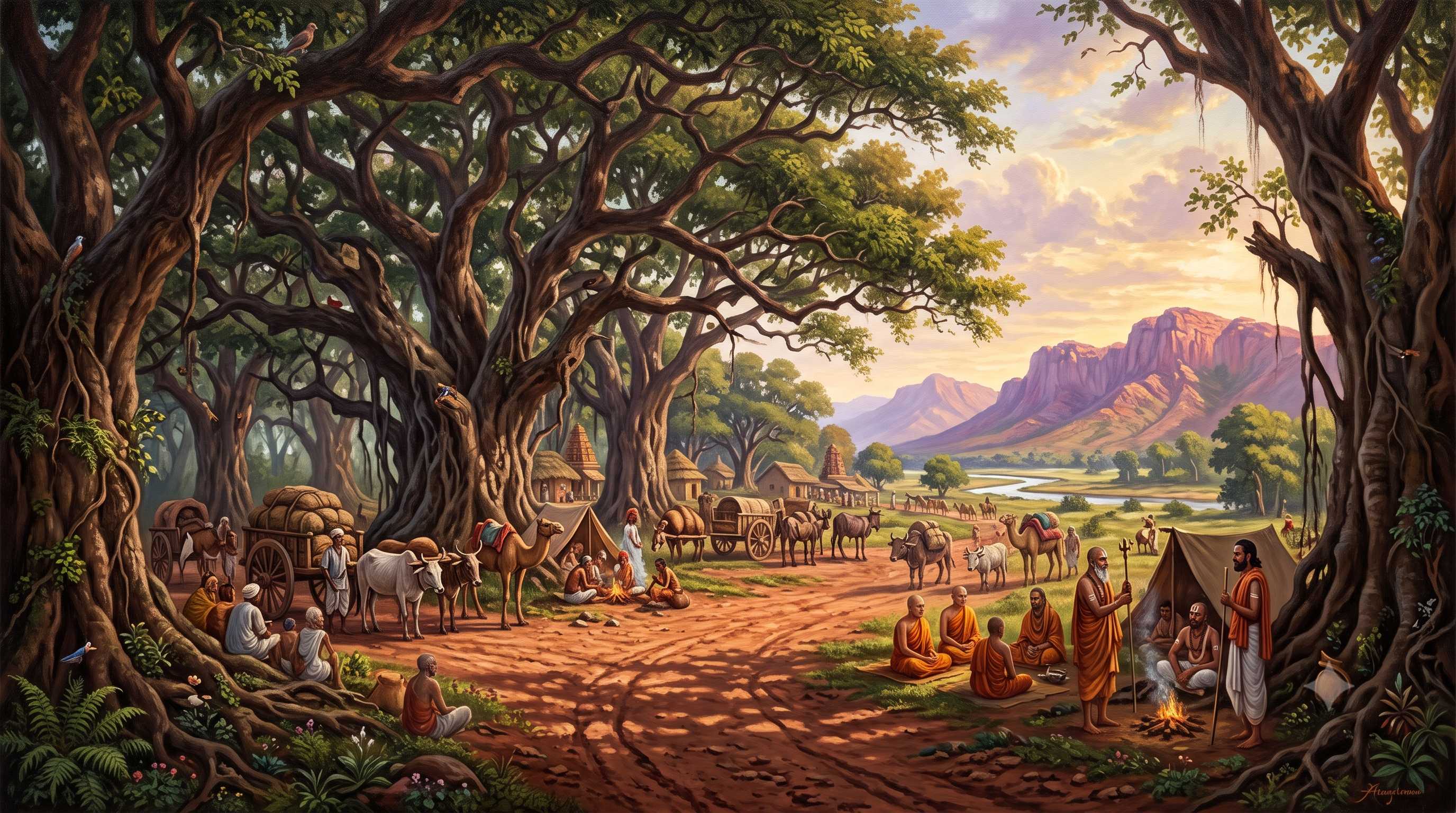


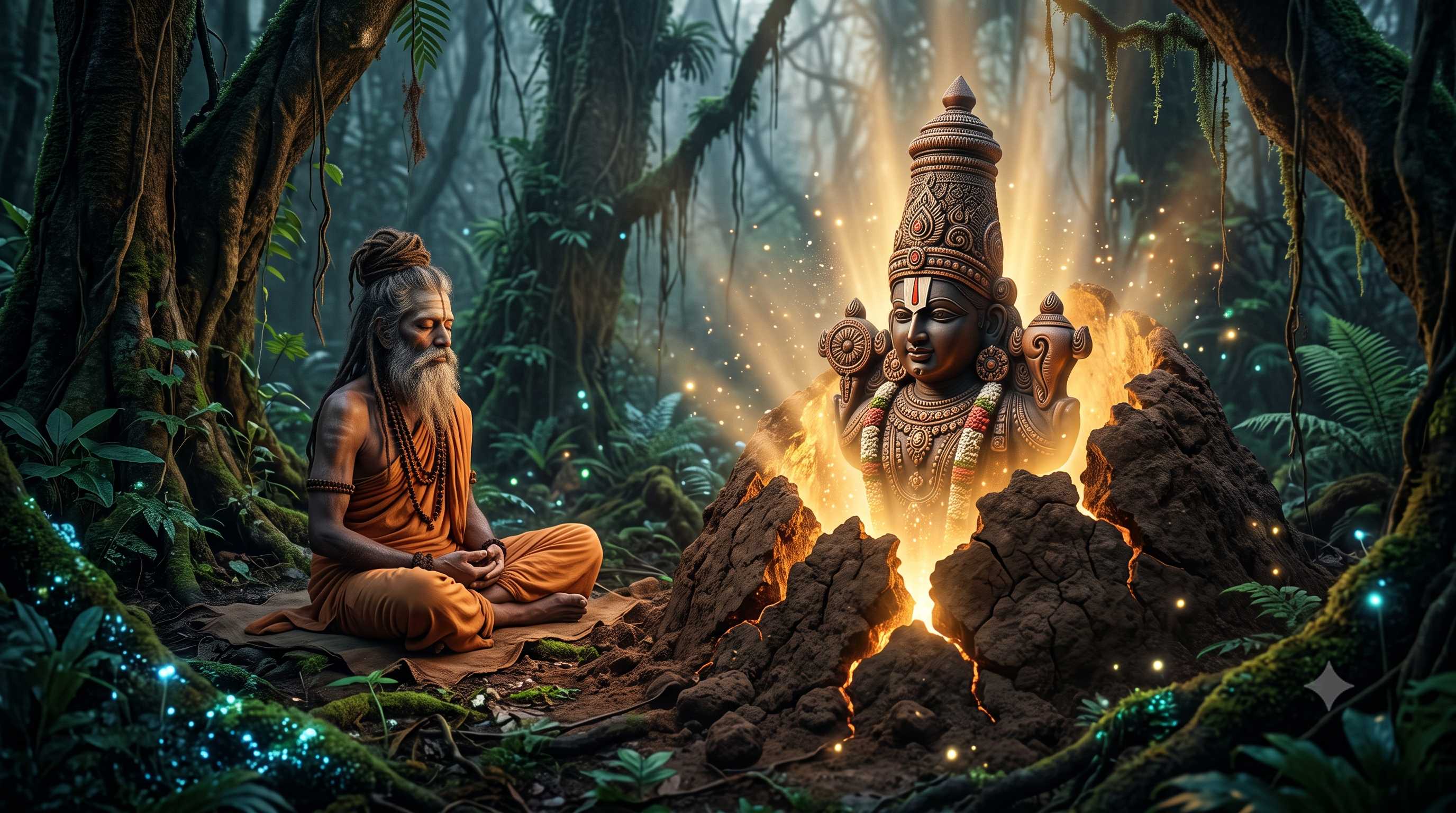
In the primordial twilight between the Satya and Treta Yugas, the ridges of Seshachala were enveloped in an unbroken wilderness[cite: 5]. Driven by an intense desire to obtain a direct physical vision of Lord Sri Venkateswara, the Vedic sage Dwaraka Maharshi renounced the material world to perform severe ascetic penance (tapas) upon the secluded forest ridge[cite: 5].
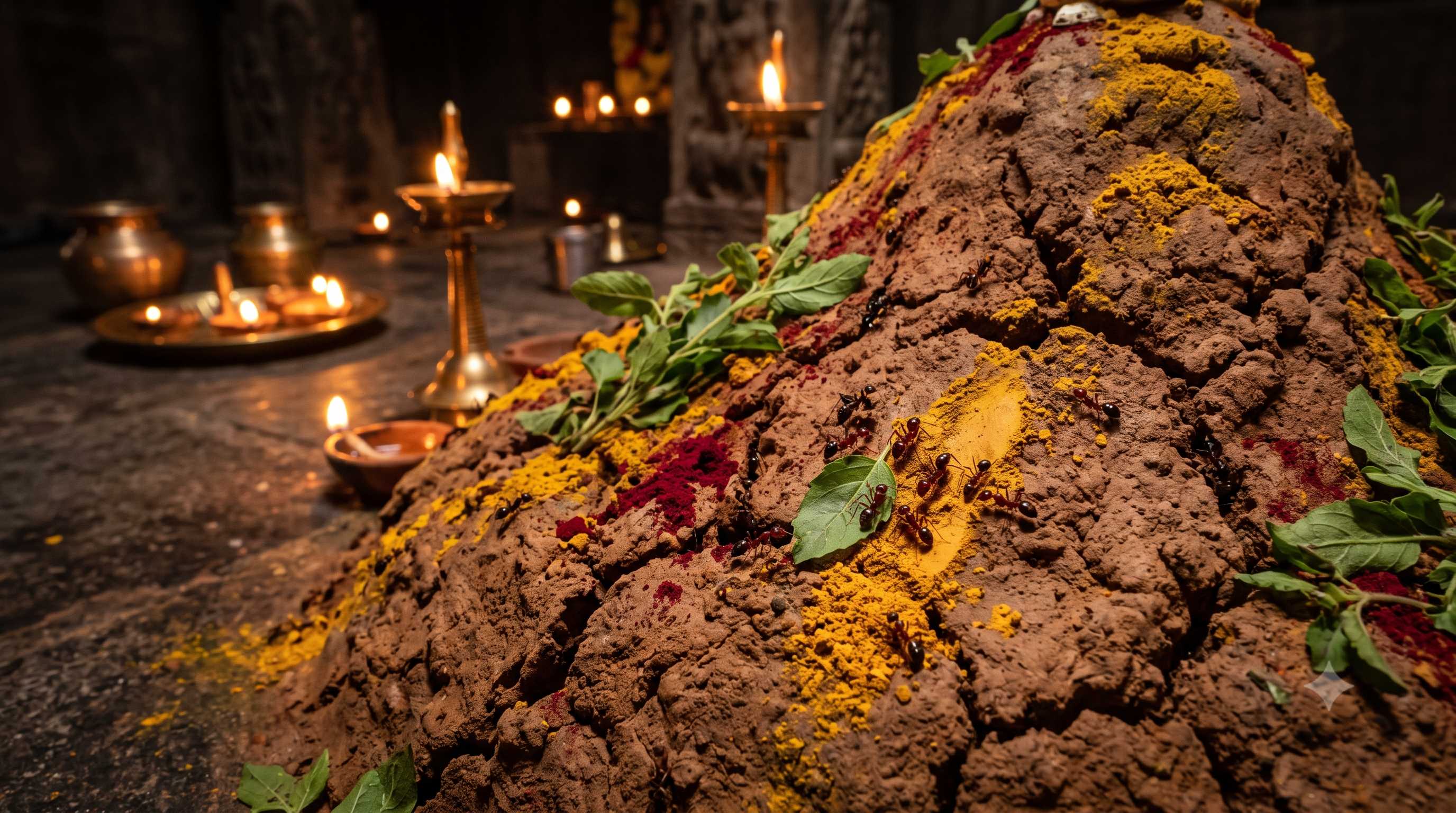
For decades, the sage sat motionless in the lotus posture (padmasana)[cite: 5]. Seasons cycled unnoticed as worker termites constructed a towering earthen anthill (valmikam) that enclosed his physical frame[cite: 5]. Moved by this devotion, Lord Venkateswara manifested Himself directly (Swayambhu) from within the core of the anthill[cite: 5].
Because the Lord arose from subterranean depths, only the upper half of his form—from crown to bust—emerged above the surface[cite: 5]. His holy lotus feet remained planted in Patala Loka, where the righteous demon-king Bali Chakravarthi conducts eternal worship[cite: 5]. Because Sage Dwaraka had sat facing north toward the Himalayas throughout his penance, the Lord manifested facing south to gaze upon his devotee, establishing the south-facing sanctum of Chinna Tirupati[cite: 5].