Kalyanraj Elite Inn • Dwaraka Tirumala, Andhra Pradesh
Google Maps Directions
Kalyanraj Elite Inn Logo
Kalyanraj
Elite Inn • Dwaraka Tirumala
Book Rooms
Best Hotel Stay in Dwaraka Tirumala

Best Hotel Stay in Dwaraka Tirumala.

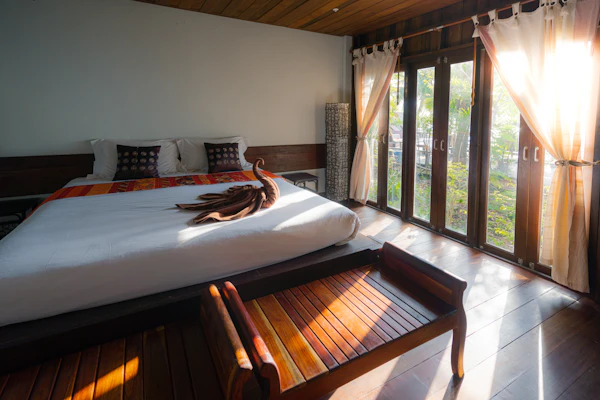
Clean, air-conditioned boutique suites situated within walking distance of the sacred temple steps. Featuring 24/7 hot water, pristine bedding, and peaceful accommodations for pilgrimage families.

Air Conditioning (Split AC)
24/7 Instant Hot Water
Pristine Satin Bedding
Temple Steps Walking Distance
Direct Front Desk

Reserve Your AC Room

Direct reservations with zero intermediary commission. Book King Suites or Group changing rooms with full generator backup.

Reserve via WhatsApp Call Desk: +91 9000760777
Boutique Accommodations

Our 5 AC Suites

Clean, spacious rooms featuring attached vitrified bathrooms, fresh linens, and restful spaces just 2 minutes from the temple steps.

Deluxe Master King Suite
Suites 01 • 02

Deluxe Master King Suite

King Bed • 2 Adults • Master Layout
Split AC 24/7 Hot Water Smart QLED TV Steps Walking Distance
Executive Group Suite
Suites 03 • 04 • 05

Executive Group Suite

Twin Beds • 2–3 Guests • High Airflow Balcony View
Split AC 24/7 Hot Water Vitrified Attached Bath Clean Satin Bedding
Complete Floor Buyout
Full Floor Buyout

Entire Floor (5 Suites)

15–20 Guests • 5 Private Baths • Wedding Base Camp
100% Floor Privacy Bridal Prep Suite Inverter Power Backup Secure Parking
Pilgrim Intelligence

Festival & Holiday Rush Calendar

Live queue wait predictions factoring in historical Devasthanam footfall data (8k–14k on normal weekdays vs 30k–45k on weekends and 50k–80k+ on major Vaishnavite festivals).

Month Year

Smooth (15–45 Mins • 8k–14k pilgrims) Moderate (1.5–3 Hrs • 18k–25k pilgrims) High Rush (4–7+ Hrs • 35k–80k+ pilgrims)
SUN
MON
TUE
WED
THU
FRI
SAT
Select any date on the calendar
Queue predictions calculate automatically based on temple footfall records.
Book Room for this Date
Streamlined Timeline

Dwaraka Tirumala Pilgrim Action Guide

A step-by-step interactive checklist of what to do, when to do it, and where to go during your sacred visit.

1. Room Check-In & Freshen Up

When: On Arrival • Where: Kalyanraj Elite Inn

Drop luggage, take a hot water bath, and wear traditional attire (Dhoti/Kurta for men, Saree/Churidar for women).

2. Tonsure / Kalyanakatta (Motta)

When: 05:00 AM – 08:00 AM • Where: Devasthanam Kalyanakatta

Fulfill your hair offering vow before bathing. Fast-track tokens and free queues are available.

3. Sudarsana Pushkarini Bath

When: 06:00 AM – 08:30 AM • Where: Foothill Pushkarini Steps

Take a holy dip or sprinkle sacred pushkarini water before climbing the hill steps.

4. Main Sanctum Darshan & Sevas

When: Morning / Evening Batches • Where: Main Temple Sanctorum

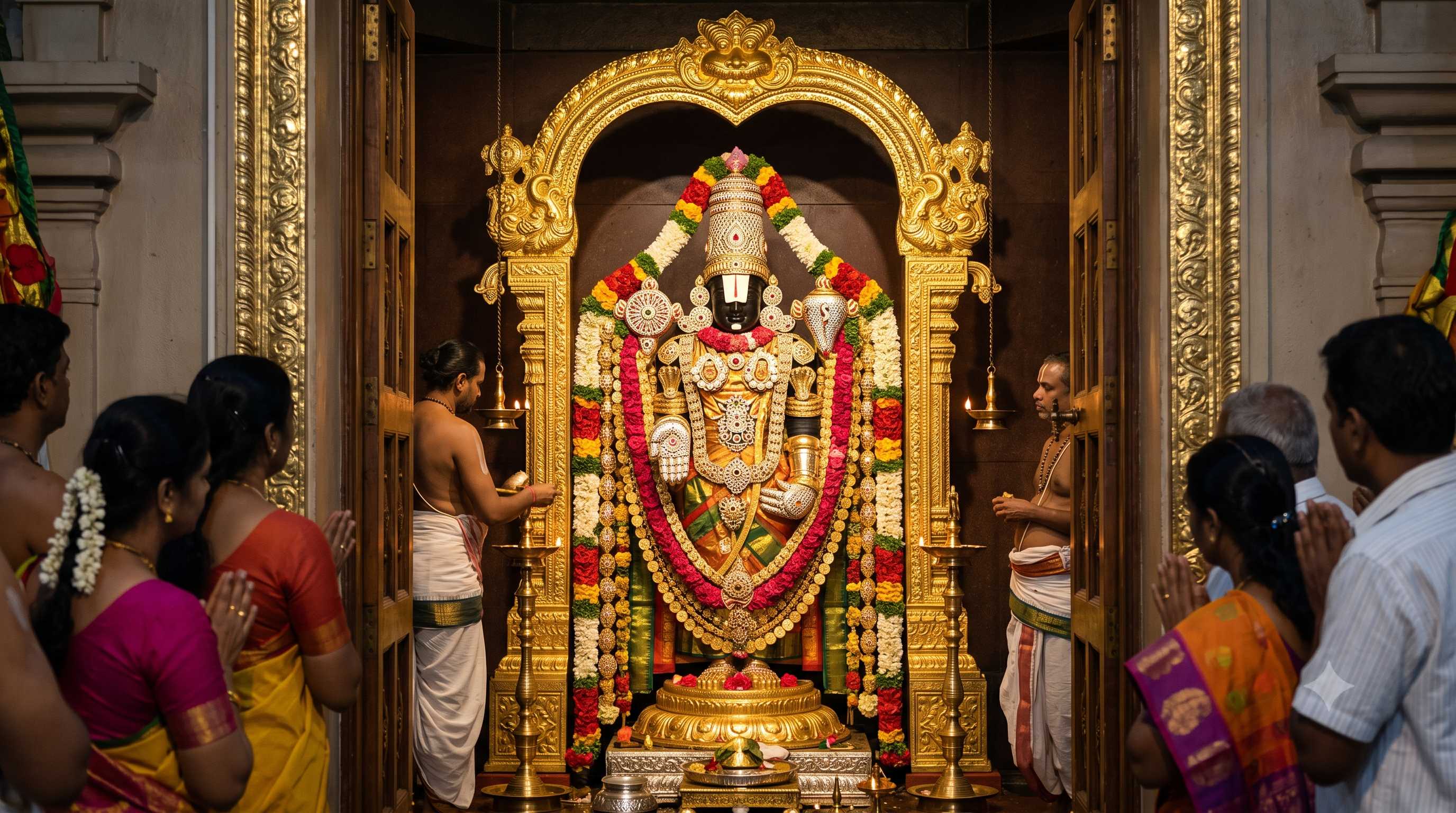
Receive darshan of the Swayambhu bust and standing Ramanuja pratishta idol[cite: 5]. Nitya Kalyanam takes place at 09:30 AM.

5. Sri Ammavari Kumkumarchana

When: After Main Darshan • Where: Ammavari Complex

Special archana batches conducted for women devotees seeking family health and prosperity.

6. Sri Vakulamata Annaprasadam

When: 11:00 AM – 02:30 PM • Where: Annaprasada Bhavanam

Partake in the free, hygienic daily satvik meal prasadam offered by the Devasthanam.

7. Laddu Prasadam Purchase

When: Post Darshan • Where: Temple Exit Counters

Collect sacred Dwaraka Tirumala Laddu prasadam and vastram before exiting.

8. Local Town Temples Parikrama

When: 04:30 PM – 07:00 PM • Where: Shivalayam & Kunkullamma

Complete your pilgrimage with visits to the local Shivalayam, Kunkullamma temple, and Sai Baba mandir.

Verified Vendor Directories & Rituals

Weddings, Rituals & Temple Services

Verified contacts and procedural guides for weddings, naming ceremonies, ear piercings, poojaris, and vehicle services. Enter your details to view direct contact numbers.

Marriage Pantulu / Purohits

Experienced Vaidika pandits and Telugu purohits for wedding muhurthams and lagna pathrikas.

Barasala / Naming Ceremony

Purohits for traditional 11th/21st-day cradle ceremonies, Jatakarma, and sacred planetary homams.

Ear-Piercing (Karnavedha)

Traditional ritual specialists and goldsmiths for gentle, auspicious ear-piercing ceremonies at the hill.

Puja & Lagna Samagri

Coconuts, fresh jasmine/rose garlands, turmeric roots, jeelakarra-bellam, and all havan essentials.

Wedding Clothes & Devasthanam Silks

Pattu sarees, dhotis, shawls, and sanctum-approved vastrams offered to Sri Venkateswara Swamy.

Wedding Catering & Cooks

Traditional Godavari Brahmin chefs for leaf-service wedding feasts, tiffins, and sweets.

Vehicle Pooja & Prasadam Ticketing

Assistance for new car/bike pujas, lemon-breaking rituals, and fast-track laddu tokens.

Vehicle Water Wash Centers

Foam wash and high-pressure underbody cleaning centers located near the temple archways.

Procedural Manual

Life Event Ritual Guides

Traditional scriptural steps to perform marriages, namakaranams, and ear-piercing rituals at Dwaraka Tirumala.

Wedding (Vivaham) Guide

  • Step 1 (Mandapam & Token): Produce Bride & Groom government-issued photo ID and 10th-grade age proof certificates at the Devasthanam office with parents present.
  • Step 2 (Lagna Samagri): Procure Jeelakarra-Bellam, Pattu vastrams, sacred yellow threads (Kankanam), and garlands from foothill stores.
  • Step 3 (Muhurtham): Vedic ritual presided by the Pantulu, Saptapadi around the sacred agni, followed by formal marriage certificate issuance.

Barasala (Naming Ceremony)

  • Step 1 (Punya Havachanam): Spiritual cleansing of child and parents at our hotel suites followed by pushkarini proksana.
  • Step 2 (Jatakarma & Puja): Recitation of planetary peace mantras and writing the child's name in unbroken rice grains (Akshatas).
  • Step 3 (Darshan): Taking the infant to the sanctum for the protective gaze of Lord Sri Venkateswara Swamy.

Karnavedha (Ear Piercing)

  • Step 1 (Auspicious Muhurtham): Set a morning hour between 06:00 AM and 09:00 AM after hair tonsure (Motta).
  • Step 2 (Ritual Worship): Puja to Lord Ganesha followed by offering coconuts and betel leaves to the kuladevata.
  • Step 3 (Piercing Ceremony): Using sterilized gold wire by experienced local smiths, followed by applying sanctified turmeric paste.
The Sthala Puranas • Documented History

The Eight Sacred Chronicles of Dwaraka Tirumala

Grounded historical and Puranic narratives of Seshachala Hill, the imperial Vengi kingdom, and the ancient Chintalapudi corridor[cite: 5]. Switch between English, Telugu, and Hindi on each chronicle folio[cite: 7].

Sage Dwaraka Penance

Sage Dwaraka & The South-Facing Swayambhu Emergence

Satya-Treta Yuga Transition

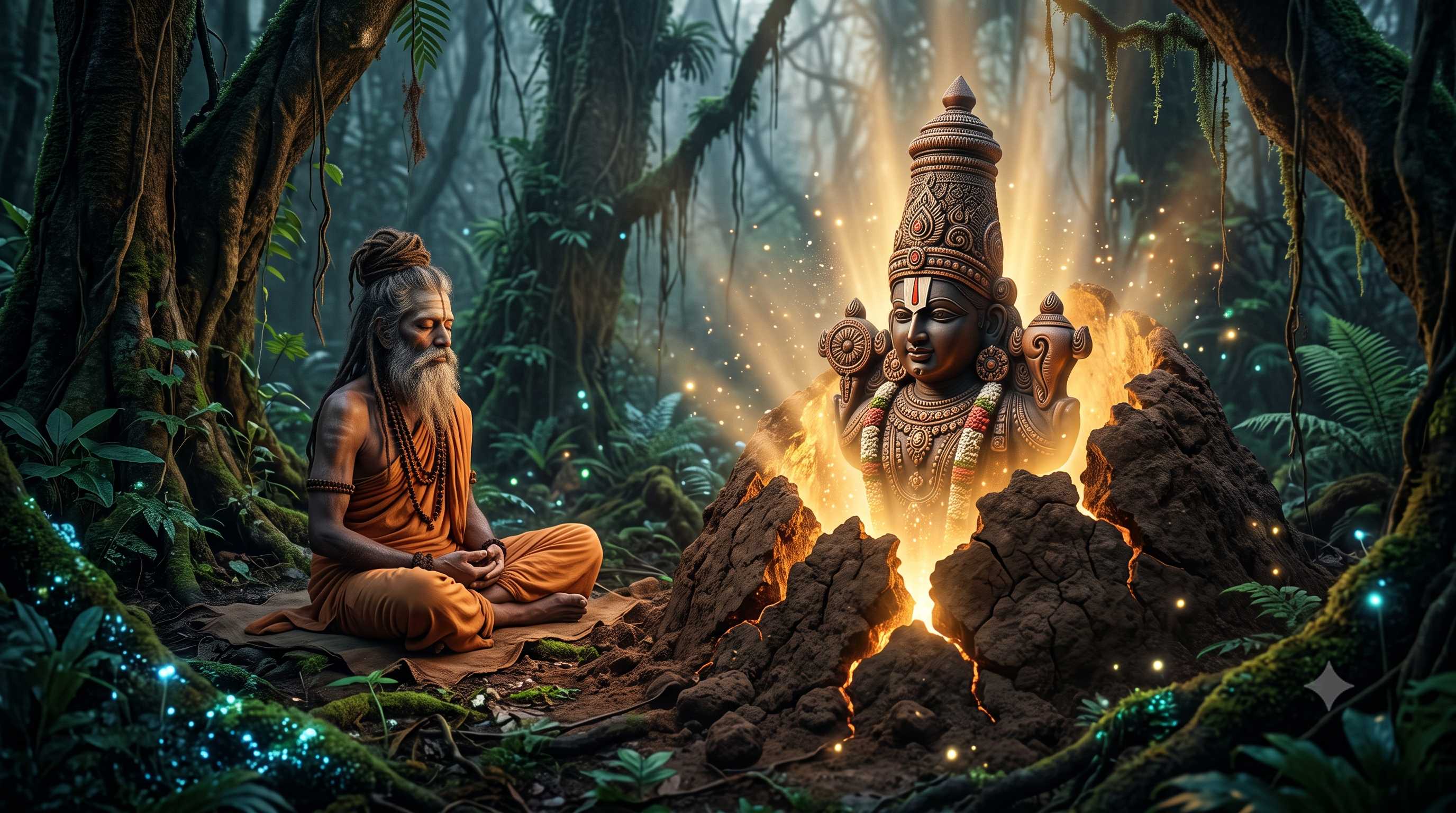
In the primordial twilight between the Satya and Treta Yugas, the ridges of Seshachala were enveloped in an unbroken wilderness[cite: 5]. Driven by an intense desire to obtain a direct physical vision of Lord Sri Venkateswara, the Vedic sage Dwaraka Maharshi renounced the material world to perform severe ascetic penance (tapas) upon the secluded forest ridge[cite: 5].

For decades, the sage sat motionless in the lotus posture (padmasana)[cite: 5]. Seasons cycled unnoticed as worker termites constructed a towering earthen anthill (valmikam) that enclosed his physical frame[cite: 5]. Moved by this devotion, Lord Venkateswara manifested Himself directly (Swayambhu) from within the core of the anthill[cite: 5].

Because the Lord arose from subterranean depths, only the upper half of his form—from crown to bust—emerged above the surface[cite: 5]. His holy lotus feet remained planted in Patala Loka, where the righteous demon-king Bali Chakravarthi conducts eternal worship[cite: 5]. Because Sage Dwaraka had sat facing north toward the Himalayas throughout his penance, the Lord manifested facing south to gaze upon his devotee, establishing the south-facing sanctum of Chinna Tirupati[cite: 5].
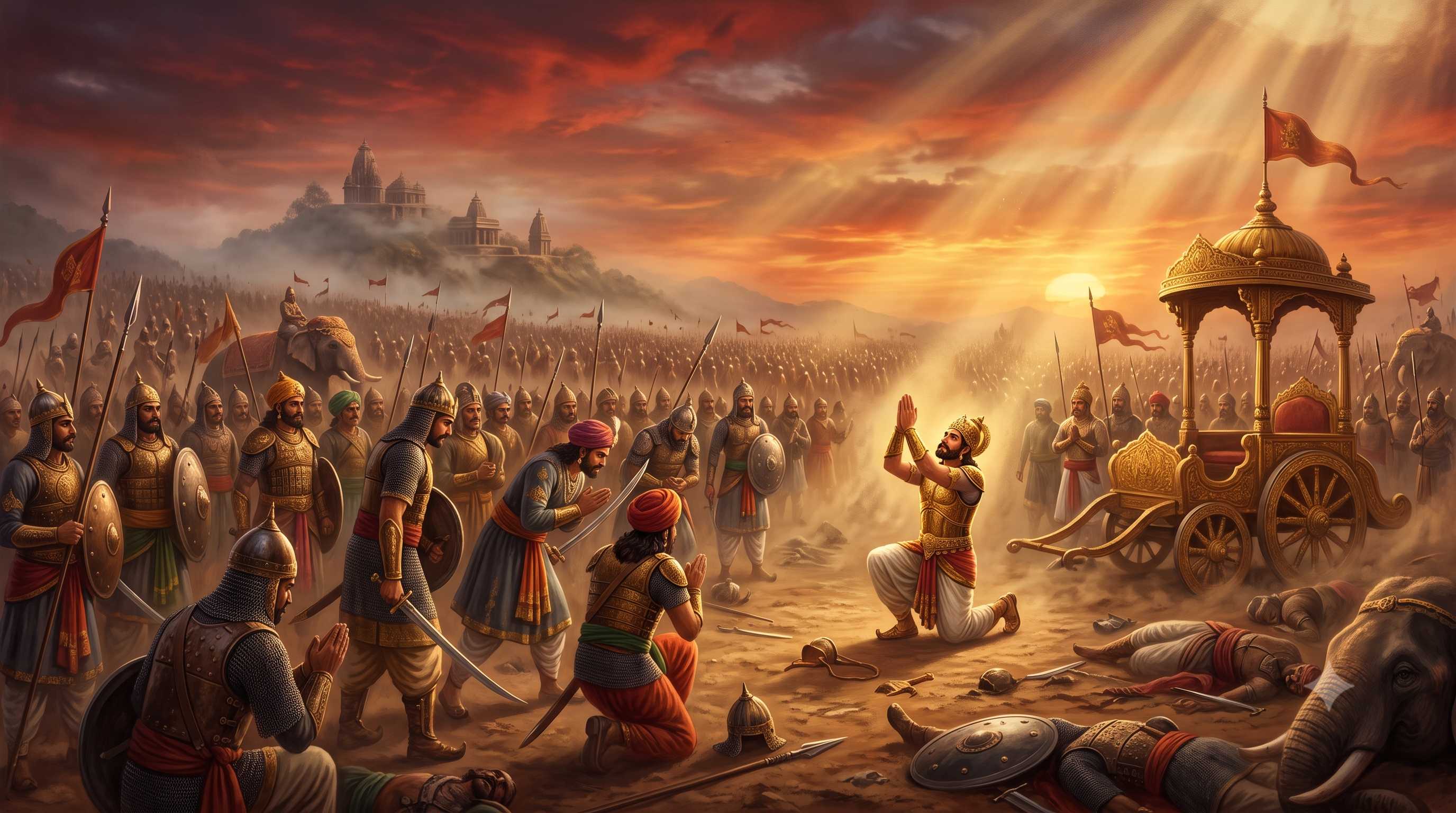
"Rising from the earthen valmikam, the Lord permanently gazes southward over the fertile plains of the coastal doab[cite: 5]."
Dual Deities Sanctum

The Liturgical Dilemma of Dual Idols & Ramanujacharya's Legacy

Vaikhanasa Agama Reform • 11th Century CE[cite: 5]

According to the Vaikhanasa Agama Sastra, no temple worship is complete without Pada Puja—the ceremonial ritual worship of the deity's lotus feet[cite: 5]. Because the Swayambhu bust emerged with its feet concealed in Patala, and because liquid Abhishekam would dissolve the fragile earthen clay bust, early priests faced a profound liturgical dilemma[cite: 5].

In the 11th century CE, the philosopher and reformer Srimad Ramanujacharya visited Seshachala Hill[cite: 5]. Under his direction, a complete standing stone idol of Lord Venkateswara was brought from Tirupati and consecrated directly behind the self-manifested bust inside the sanctum[cite: 5].

This established the only sanctum of its kind in India: two primary deities side-by-side beneath a single golden Vimana spire[cite: 5]. Priests perform daily liquid washings on the stone idol, while the original Swayambhu bust remains protected[cite: 5]. The self-manifested bust bestows Moksha (spiritual liberation), while the standing idol grants Dharma, Artha, and Kama (righteous worldly prosperity)[cite: 5].

"Two deities sheltered under a single Vimana: uniting spiritual salvation with earthly prosperity[cite: 5]."
Emperor Aja Battlefield Surrender

The Hubris of Emperor Aja & The Battle of the Swayamvaram

Treta Yuga • Brahma Purana Record[cite: 5]

The Brahma Purana narrates that during the Treta Yuga, Emperor Aja of Ayodhya—grandfather of Lord Sri Rama—led his royal army through the coastal plains on his way to attend the swayamvara of Princess Indumati of Vidarbha[cite: 5]. As his chariot passed Seshachala, local sages urged him to ascend the hill and offer homage to Lord Venkateswara[cite: 5].

Consumed by royal pride, Emperor Aja bypassed the hill without stopping[cite: 5]. While he won Princess Indumati's bridal garland at the assembly, jealous suitor-kings ambushed his caravan on the return journey, surrounding his army on the battlefield[cite: 5].

Facing defeat, Aja realized his pride had caused this crisis[cite: 5]. He dropped his weapons, knelt on the battlefield facing Seshachala, and surrendered in prayer[cite: 5]. Miraculously, a supernatural calm descended over the battlefield: the rival kings lowered their weapons, embraced Aja, and escorted the royal couple safely to Ayodhya[cite: 5].

"True surrender at Seshachala dispels human arrogance into divine reconciliation[cite: 5]."
Coiled Serpent Ridge

The Coiled Serpent of Seshachala & Syncretic Sectarian Harmony

Topographical Theology • Hari-Hara Kshetra[cite: 5]

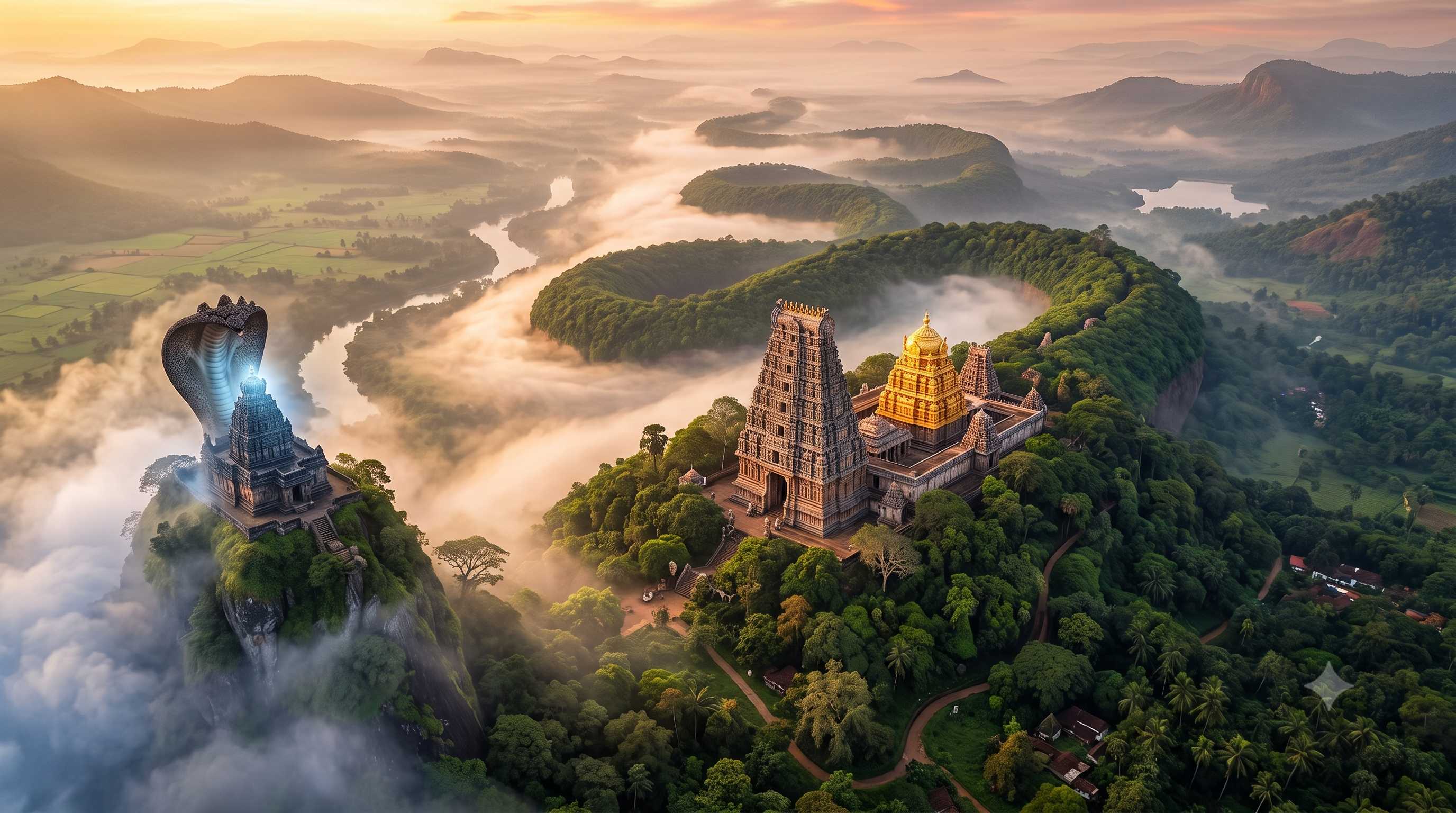
When viewed from the surrounding plains, the physical ridgelines of Seshachala Hill trace the form of a coiled serpent—the terrestrial manifestation of Adisesha, upon whom Lord Vishnu rests[cite: 5]. Historically, coastal Andhra witnessed theological rivalries between Shaivites and Vaishnavites[cite: 5].

The geography of Seshachala reconciled this divide: oral lore holds that Adisesha assumed this form to carry both deities[cite: 5]. Upon the serpent's raised hood stands the Shiva sanctuary of Sri Konda Malleswara Swamy, while the temple of Lord Venkateswara crowns the serpent's body[cite: 5].

Pilgrims climb the hill to visit both shrines, honoring the sanctuary as a center of Hari-Hara Abheda—the philosophical understanding that Shiva and Vishnu are one[cite: 5].

"Adisesha holds Shiva on his crest and Vishnu on his tail: a physical bridge of Hari-Hara unity[cite: 5]."
Sacred Red Ants Anthill

The Sacred Guardians of the Anthill: The Legend of the Konijulu

Anthill Ecology • Non-Liquid Abhishekam[cite: 5]

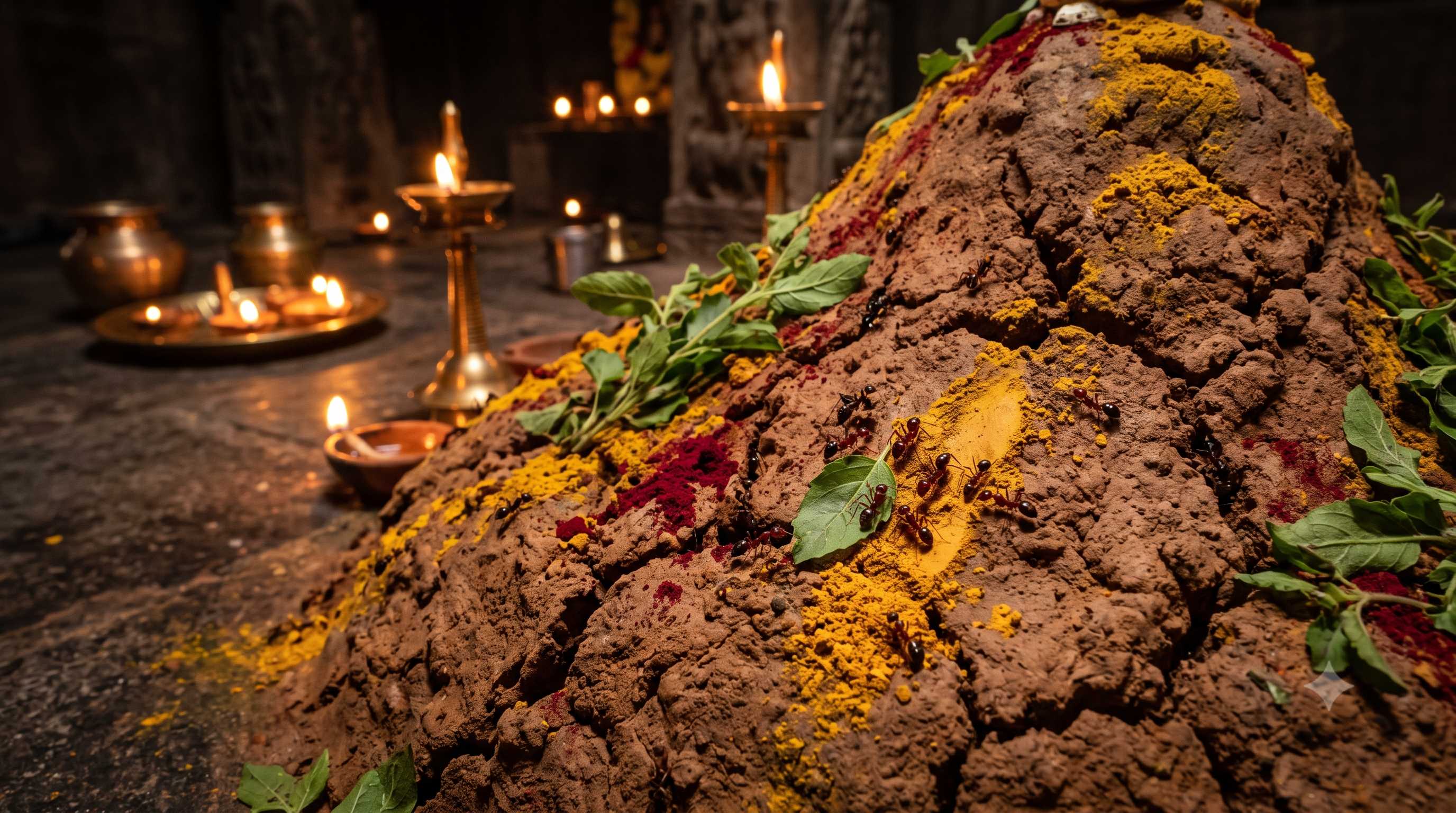
The Swayambhu bust of Lord Venkateswara is formed of sacred anthill clay rather than stone[cite: 5]. For centuries, temple chronicles have documented that the earthen mound beneath the bust is inhabited by colonies of subterranean red ants, known locally as Konijulu[cite: 5].

Whenever liquids touch the clay bust, these ants surface in defensive vigilance around the mound[cite: 5]. The temple priests view these creatures as divinely appointed guardians protecting the Lord's hidden lotus feet[cite: 5].

To avoid disturbing the colony, the temple maintains an Agamic prohibition on liquid Abhishekam for the self-manifested bust[cite: 5]. Only dry sandalwood paste and silks are offered to the Swayambhu idol, while water ceremonies are performed on the stone replica behind it[cite: 5].

"Guardians of the subterranean feet: the sacred ants that keep perpetual vigil over the anthill[cite: 5]."
Pedavegi Citadel Ruins

The Fortress of Pedavegi & The Sacred Well of Sacrifice

3rd – 12th Century CE • Eastern Chalukya Dynasty[cite: 5]

Eleven kilometers from the temple slopes lies the village of Pedavegi (ancient Vengipura), which served as the capital of Andhradesa for nine centuries under the Salankayana, Vishnukundina, and Eastern Chalukya dynasties[cite: 5]. Archaeological Survey of India (ASI) excavations at Kotadibba uncovered twenty-five stone inscriptions from this era[cite: 5].

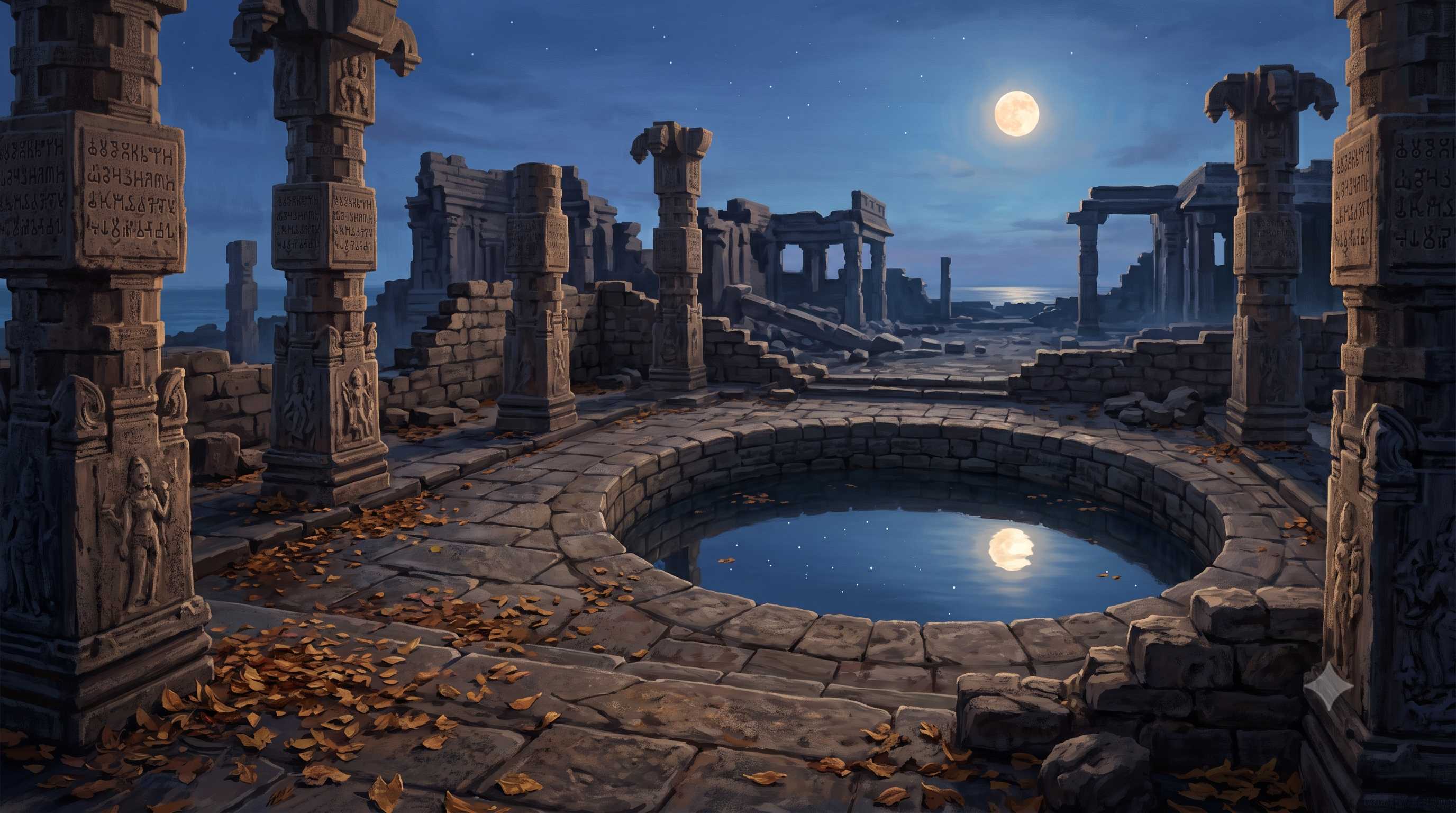
Within the fortress ruins sits a circular, stone-lined well known as the Well of Sacrifice[cite: 5]. During a siege when invading armies breached the gates, the royal women and maidens of Vengi refused captivity and dishonor[cite: 5].

Dressed in bridal silks and singing sacred hymns, they stepped into the deep waters of the well, giving their lives to preserve their honor[cite: 5]. The well remains a somber monument to the valor of the region's historical women[cite: 5].

"The quiet well of Pedavegi: where royal heroines chose eternal honor over defeat[cite: 5]."
Eluru Buddha Statue Lake

Gaja Vallivari Cheruvu & Eluru's Royal War Elephants

Imperial Elephant Corps • 74-Foot Buddha Monument[cite: 5]

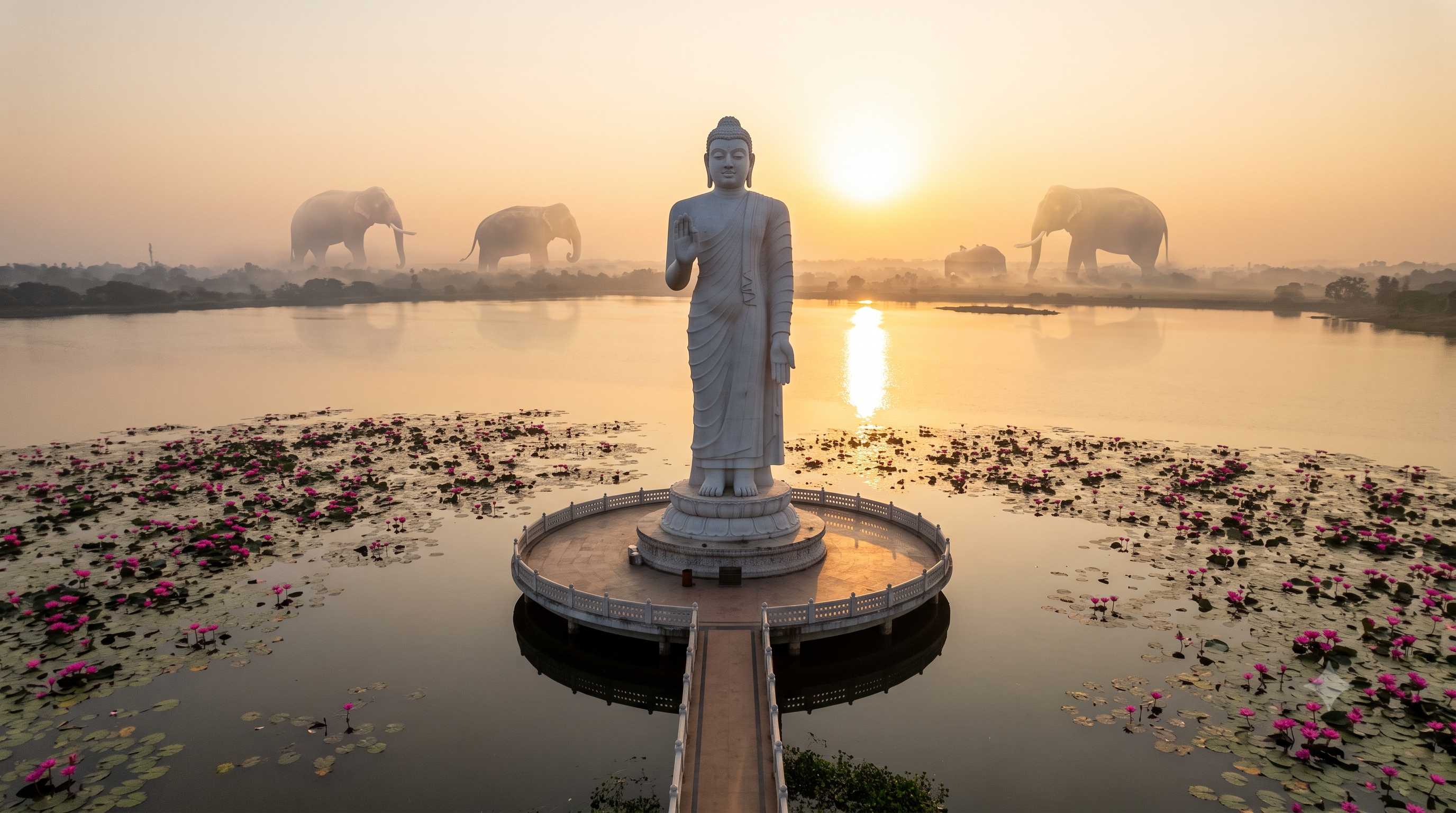
During the medieval era, Eluru (Helapuri) served as a military staging ground for imperial armies whose offensive core relied on war elephants (Gaja Sainya)[cite: 5]. Rulers excavated an expansive freshwater reservoir, naming it Gaja Vallivari Cheruvu (The Lake of the Elephant Clans), to provide water for hundreds of elephants returning from campaigns[cite: 5].

In modern times, this military reservoir was revitalized as the Eluru Buddha Park[cite: 5]. Rising 74 feet above the water is a colossal statue of the Buddha in the Abhaya mudra, honoring the region's ancient Buddhist heritage[cite: 5].

"From royal war elephant bathing grounds to a 74-foot monument of peace[cite: 5]."
Chintalapudi Ancient Tamarind Canopy

The Tamarind Grove & The 2,300-Year Antiquity of Chintalapudi

Pre-Mauryan Origin • Stratigraphic Unity[cite: 5]

Positioned forty-one kilometers northwest of Dwaraka Tirumala, Chintalapudi preserves evidence of human habitation dating back over 2,300 years, bridging the pre-Mauryan and Satavahana epochs near the Guntupalli Buddhist rock-cut caves[cite: 5].

The name originates from Chinta Chettu (tamarind tree) and Pudi (settlement)[cite: 5]. In ancient times, the northern approach to the sacred hill featured a canopy of tamarind trees that sheltered traveling merchants, monks, and pilgrims[cite: 5].

In geology, the 250-million-year-old Permian Gondwana rocks of the Chintalapudi Formation form the deep foundation that supports the Cretaceous sandstones of Seshachala Hill, uniting both settlements through shared stone and history[cite: 5].

"Sheltering 2,300 years of pilgrims beneath the historic tamarind canopy[cite: 5]."
Regional Heritage & Shrines

Sightseeing, Temples & Nature Excursions

Explore sacred shrines right in Dwaraka Tirumala, alongside waterfalls, Godavari river cruises, and rock-cut Buddhist caves.

Shivalayam Dwaraka Tirumala

Shivalayam

Dwaraka Tirumala • Town Center

Ancient Shiva temple visited alongside Sri Vari darshanam, symbolizing the eternal Hari-Hara harmony of Seshachala hill[cite: 5].

Kunkullamma Ammavaru

Kunkullamma Temple

Dwaraka Tirumala • Foothills

The revered village guardian deity (Grama Shakthi). Visiting families and newlyweds seek blessings and offer traditional pongal here.

Papikondalu Godavari River

Papikondalu & Godavari River

Rajahmundry / Polavaram Boat Points

The famous Godavari gorge winding through the Eastern Ghats. Day boat cruises feature mist-covered peaks, riverside sands, and bamboo huts.

Guntupalli Buddhist Caves

Guntupalli Buddhist Caves

Kamavarapukota • ~25 km

The "Andhra Ajanta"—2,000-year-old rock-cut monastic caves, circular stone chaitya halls, and stupas carved during the Ashokan era[cite: 5].

Sir Arthur Cotton Barrage

Sir Arthur Cotton Barrage

Dowleswaram / Rajahmundry • ~70 km

Historic barrage across the Akhanda Godavari offering sunset views, fresh river breezes, and the iconic Godavari Arch Bridge.

Undavalli Rock Caves

Undavalli Rock Caves

Near Vijayawada • ~90 km

7th-century monolithic 4-story rock-cut cave temple featuring the massive sandstone reclining idol of Lord Vishnu (Anantasayana Padmanabha).

Pilgrim Transit

Verified Pilgrim Cabs & Transfer Desk

Pre-arrange reliable taxi pickups, railway transfers, and regional tours directly with local drivers.

Bhimadole Junction (17 km)

Nearest railhead. 25–30 mins transfer time directly to our hotel.

Book Bhimadole Cab

Eluru Railway Station (42 km)

Major express train junction. 50–60 mins transfer time.

Book Eluru Cab

Vijayawada Airport (95 km)

1 hr 45 mins highway route with flight delay tracking.

Book Airport Cab
×

Unlock Vendor Contacts

Enter your details below. Once submitted, verified contact numbers and direct WhatsApp links will appear immediately: